TL;DR: The best storm damage restoration company in Thonotosassa, FL holds an active Florida contractor license you can verify yourself, carries IICRC certification, has a real local address and true 24/7 response, and can both tarp/dry your property and rebuild it under one contract. Watch for out-of-town trucks that show up days after a storm pushing you to sign an Assignment of Benefits (AOB) form before an adjuster has even inspected the damage.
If a tree just came through your roof or wind-driven rain soaked your ceilings after the latest system moved through Hillsborough County, you’re probably getting calls and door knocks from companies you’ve never heard of. Some are legitimate. Some are out-of-state crews chasing the storm and gone before the drywall dust settles. Here’s how to tell the difference before you sign anything.
What should you look for in a storm damage restoration company in Thonotosassa?
Look for a Florida-licensed, IICRC-certified company with a physical local address, true around-the-clock response, and the ability to handle both the emergency mitigation and the full rebuild. Those four things separate an established local contractor from a crew that will be out of state by the time your insurance claim closes.
A company that can only tarp and dry, then hands you off to a separate contractor for framing, drywall and paint, adds a second negotiation, a second scope dispute, and a second company to chase if something goes wrong. DRYCOR RESTORE is an IICRC Certified Firm, licensed in Florida (CBC1253966), based in Thonotosassa, and runs 24/7 emergency service alongside full general contracting and storm damage restoration, so the same team that boards up your windows can also be the one framing your new roof deck.
How do you verify a contractor’s Florida license before you sign anything?
You can confirm any Florida contractor’s license status for free through the state’s own lookup tool before you let anyone on your roof. Search the company’s license number or business name at MyFloridaLicense.com, the Department of Business and Professional Regulation’s public portal, and check that the license is active, not expired or under disciplinary action.
Every legitimate Florida general contractor has a number in the format of a certified building contractor license, similar to DRYCOR RESTORE’s CBC1253966. If a company that showed up after the storm can’t give you a license number on request, or the number comes back inactive, that’s a hard stop. The same lookup shows you the license type, which matters: storm rebuild work (roof decking, framing, structural repairs) requires a certified contractor license, not just a handyman registration.
What warning signs point to an out-of-state storm chaser?
The biggest warning sign is pressure to sign an Assignment of Benefits (AOB) form before an adjuster has inspected the damage or you’ve gotten a written scope of work. An AOB signs your insurance claim rights over to the contractor, and once it’s signed, you often lose the ability to negotiate directly with your own insurer.
Other signs to watch for: out-of-state plates on the truck, a business card with no permanent local address, demands for full payment upfront, and a hard sales pitch to sign something on the spot. Florida tightened AOB rules in its 2023 insurance reform legislation specifically because of storm-chasing abuse, and homeowners who have questions about a contractor or an insurance practice can check with the Florida Department of Financial Services’ consumer division before signing anything. A company that’s still going to be in Thonotosassa next year has no reason to rush you.
Does the company handle mitigation and rebuild under one roof?
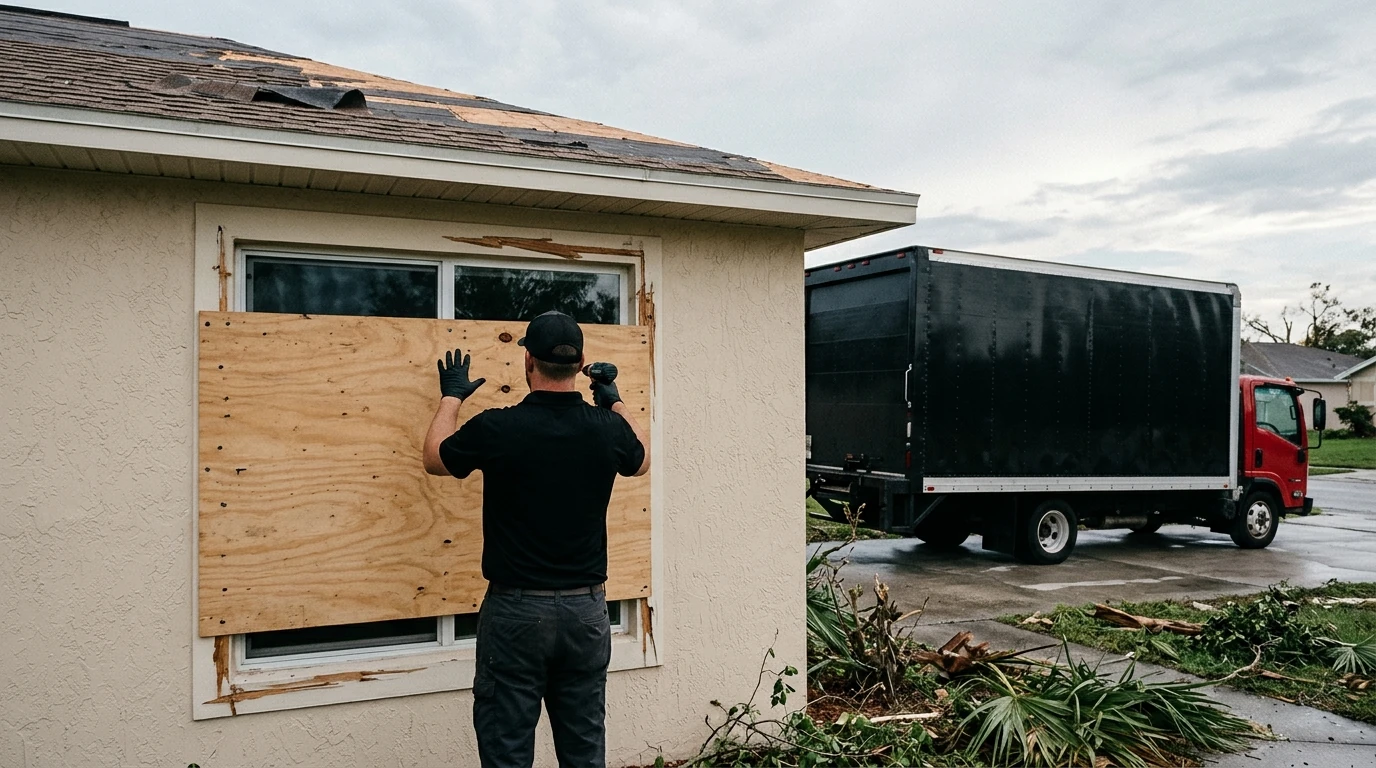
The strongest choice handles emergency board-up and tarping, water extraction and drying, and the full structural rebuild under one contract, with one point of contact from day one to the final walkthrough. That continuity matters more after a storm than almost any other factor, because mitigation decisions (what gets torn out, what’s salvageable, how fast the property dries) directly affect what the rebuild has to cover.
DRYCOR RESTORE’s emergency board-up and tarping crews secure the property the same day, and the same company carries the job through general contracting for framing, roofing, drywall and finish work. That’s also where documentation matters: dried-to-standard numbers (per the IICRC S500 water damage standard where water intrusion is involved) and photo records from mitigation become the backbone of the insurance claim once rebuild estimates go in. Our earlier guide on hurricane storm damage repair in Thonotosassa walks through what that claim timeline typically looks like.
What should you do before you hire anyone?
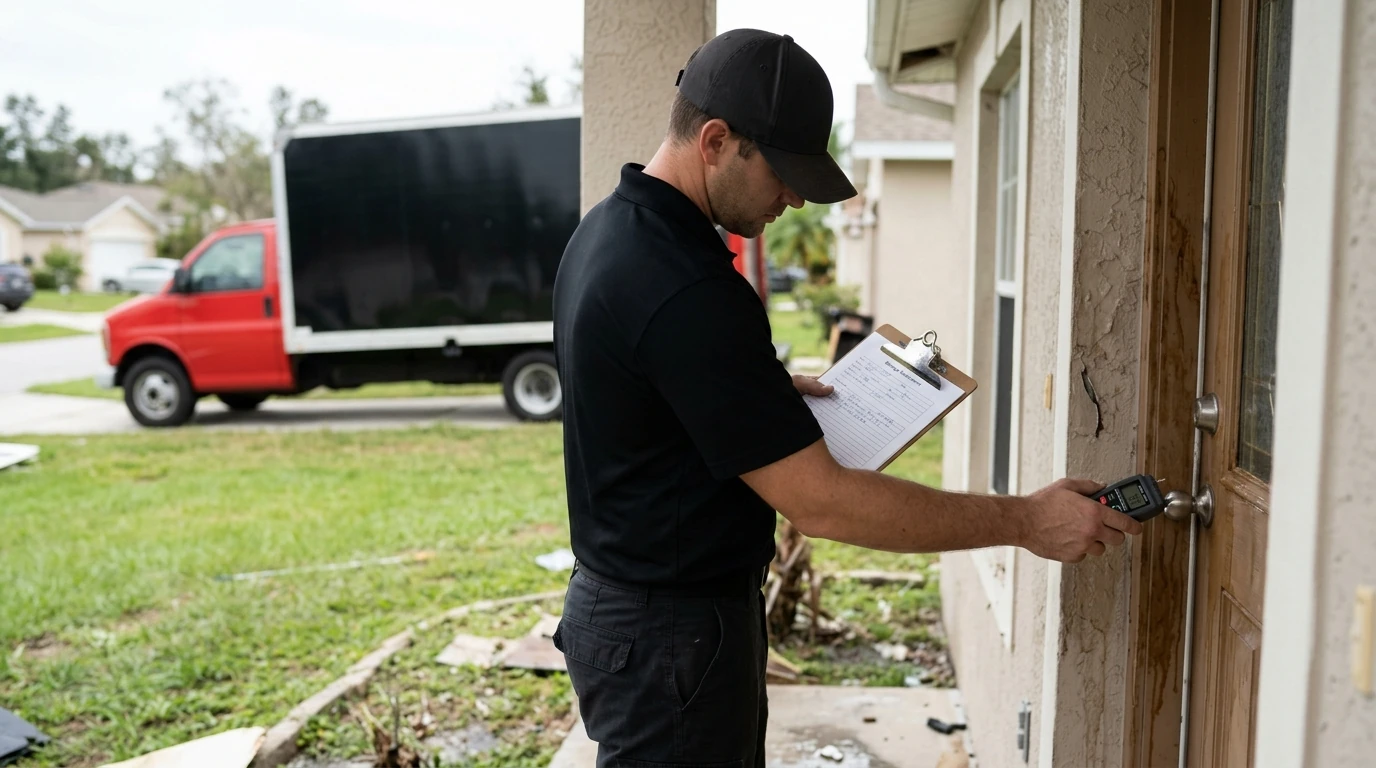
Get a written, itemized scope of work before any contract is signed, and confirm in writing what’s being billed as emergency mitigation versus insurance-covered rebuild. A verbal estimate or a one-line invoice is not enough to support a claim or protect you if the scope changes mid-job.
If you’re still assessing damage and haven’t called anyone yet, start with a written estimate request rather than a signature. Call DRYCOR RESTORE at (813) 829-1091 or request an assessment through our contact page and ask for the scope in writing before you commit.
A storm doesn’t give you time to shop around for weeks, but it does give you enough time to check a license number and read what you’re signing. That ten minutes of verification is the difference between a rebuild that goes smoothly and a claim fight that drags on for months.
About DRYCOR RESTORE
DRYCOR RESTORE is an IICRC Certified Firm based in Thonotosassa, FL, licensed in Florida under CBC1253966, serving the Tampa Bay region since 2005. This guide was prepared by Robert Showalter and the DRYCOR RESTORE team, which runs 24/7 emergency response and handles storm damage mitigation, board-up and tarping, and full general contracting rebuild under one roof across Thonotosassa, Tampa, Brandon, Plant City and the surrounding Hillsborough County area.