
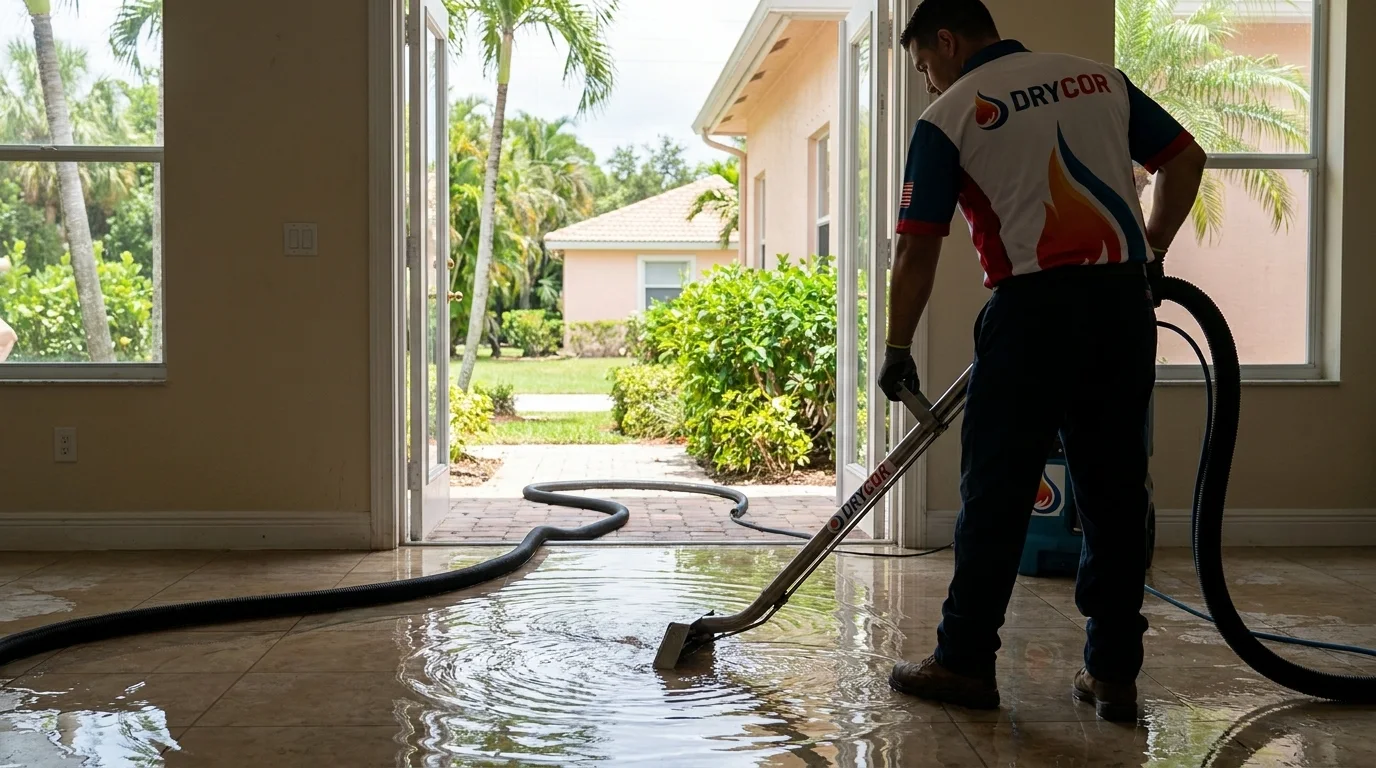
24/7 Emergency Flood Damage Restoration in Tampa Bay
24/7 emergency flood damage restoration in Tampa Bay and surrounding areas. IICRC-certified, insurance billing accepted. Call (813) 829-1091.
Flood damage in Tampa Bay? We answer 24/7, call now and we’ll walk you through what to shut off and what to avoid touching before the crew arrives. Floodwater is different from a burst pipe or an overflowing appliance: it typically carries silt, bacteria, and whatever the ground or a nearby waterway picked up on the way into your home, and it behaves differently in drywall, subfloor, and insulation than clean water does.
What Flood Damage Restoration actually involves
Flood intrusion from the Hillsborough River, a retention pond, or sheet flow across flat yard grading almost always falls into IICRC Category 3, contaminated water, which changes the entire scope of the work compared to a clean-water loss. Porous materials that touched floodwater, carpet, pad, baseboards, drywall below the waterline, often can’t be dried and disinfected to a safe standard; they have to come out. Crews use submersible pumps and truck-mounted extraction for standing water, then move into tear-out, antimicrobial treatment, and structural drying with daily moisture readings logged against an IICRC S500 drying standard. On a slab-on-grade home, which describes most construction in this part of Hillsborough County, the work concentrates on wall cavities, cabinet toe-kicks, and anywhere water wicked upward rather than pooled on a basement floor, since basements are rare here.
Our process
- Floodwater categorization and safety shutoff. Before anyone starts pumping, we confirm electrical and gas safety, check for structural hazards, and stage PPE appropriate to contaminated water.
- Contaminated water extraction. Standing water comes out first with pumps and truck-mounted extractors, prioritizing rooms where water has been sitting longest.
- Removal of unsalvageable porous materials. Carpet, pad, baseboards, and drywall at and below the flood line get cut out and documented with photos before disposal, since these materials can’t be reliably disinfected.
- Antimicrobial treatment of framing and subfloor. Exposed studs, sill plates, and subfloor are treated to address the bacterial load floodwater leaves behind.
- Structural drying with daily monitoring. Air movers and dehumidifiers run against moisture targets, with readings tracked and shared so the drying timeline is backed by data, not guesswork.
What separates a good flood damage response from a bad one
The most common shortcut is treating a flood loss like a clean-water leak: drying in place instead of removing contaminated materials, or cutting drywall at an arbitrary height instead of above the actual moisture line, which leaves wicked material behind the patch. Another frequent miss is skipping baseboard removal, water travels behind it and keeps wicking into the wall cavity long after the visible surface looks dry. Adjusters reviewing a flood claim generally want to see pre-demo photos, a documented flood cut line, and daily psychrometric logs showing temperature, humidity, and material moisture content. A restoration crew working under IICRC WRT training builds that documentation into the job from day one rather than reconstructing it after the fact.
What does Flood Damage Restoration cost?
Costs vary with how much water intruded, how long it sat, and how much demolition the contamination level requires. These are typical industry ranges, not a quote, every loss is different and DRYCOR RESTORE provides a written scope of work before any demolition or drying begins. Homeowners insurance typically covers sudden water intrusion from an internal source, but ground or surface flooding is usually a separate flood policy matter, so confirming coverage early matters.
| Scenario | Typical range |
|---|---|
| Single room, shallow flood intrusion | $1,500 - $3,800 |
| Flood cut and drywall removal, per affected room | $800 - $2,200 |
| Whole-home slab flooding, minor depth | $6,000 - $15,000 |
| Contents cleaning after floodwater exposure | $500 - $2,500 |
| Crawlspace flood cleanup and sanitizing | $1,200 - $4,000 |
| Large-scale multi-room flood with contamination | $15,000 - $40,000+ |
Seasonal & regional considerations
Our Tampa Bay base sits on low, flat terrain near the Hillsborough River, and the June through November wet season brings tropical systems and afternoon thunderstorms that can overwhelm drainage faster than many homeowners expect. Sandy soil drains quickly under normal conditions but saturates during sustained rain, which is when sheet flow and low-lying yards push water toward slab foundations. Humid, warm air for most of the year also means the window between a flood event and microbial growth starting on wet materials is short, which is part of why tear-out and drying speed matter more here than in drier climates.
Service area
Based in the Tampa Bay area, DRYCOR RESTORE responds to flood damage throughout the surrounding Hillsborough County communities, including Seffner, Plant City, and the northeastern Tampa area.
If floodwater has reached your floors, walls, or crawlspace, call (813) 829-1091 to schedule flood cleanup and get a written scope of work started before damage spreads further into the structure.
Services We Handle
- Flood Restoration
Frequently Asked Questions
Does homeowners insurance cover flood damage restoration?
Is all floodwater considered contaminated?
What is a flood cut and why is it necessary?
How long after a flood does mold become a risk?
Can flooded flooring be saved, or does it need to be replaced?
What should I do while waiting for a flood restoration crew to arrive?
Looking for the best flood damage restoration company in Tampa Bay?
DRYCOR RESTORE provides licensed and insured flood damage restoration across Tampa Bay and the surrounding area, and has served local property owners since 2005. Customers rate us 4.9 out of 5 stars on Google. We answer calls 24/7 — call (813) 829-1091 for immediate help.
Need Flood Damage Restoration now?
We respond 24/7 across Tampa Bay and surrounding FL cities.