
TL;DR: Sewage cleanup and remediation means removing contaminated wastewater, disposing of unsalvageable porous materials, and disinfecting every affected surface to IICRC S500 standards for Category 3 water. In Florida, most jobs run $1,500 to $7,500 depending on how far the water traveled and what it touched. Homeowners insurance often covers sudden sewage backups under the dwelling or personal property section, though many policies require a separate sewer backup rider. Never attempt cleanup yourself if the water has touched drywall, carpet padding, or HVAC returns.
If a toilet backed up in a Plant City home near Historic Downtown, or a septic line failed after a heavy August storm rolled through Hillsborough County, the water sitting on that floor right now isn’t just dirty. It’s classified as Category 3 water, also called black water, and it carries bacteria, viruses, and parasites that regular mopping and bleach can’t fully address. What you do in the next few hours determines whether this stays a floor-level cleanup or turns into a subfloor and drywall replacement job.
What Should You Do Right After a Sewage Backup?
Stop using water in the house, shut off the main supply if the backup is from a sewer line, and keep people and pets out of the affected room. Those three actions limit how far the contamination spreads before help arrives.
Do not run a wet/dry shop vac rated for regular water through sewage. Standard vacuums aren’t built to filter the bacteria load, and you’ll aerosolize contaminated particles into the air you’re breathing. If the backup is coming from a toilet or floor drain, close the shutoff valve behind it rather than trying to plunge or flush again, since that only pushes more contaminated water into the room.
Photograph the standing water and any items it touched before anything gets moved or discarded. Insurance adjusters want to see the extent of the loss, and photos taken in the first hour are worth more than a description written a week later.
How Does Professional Sewage Cleanup Work?
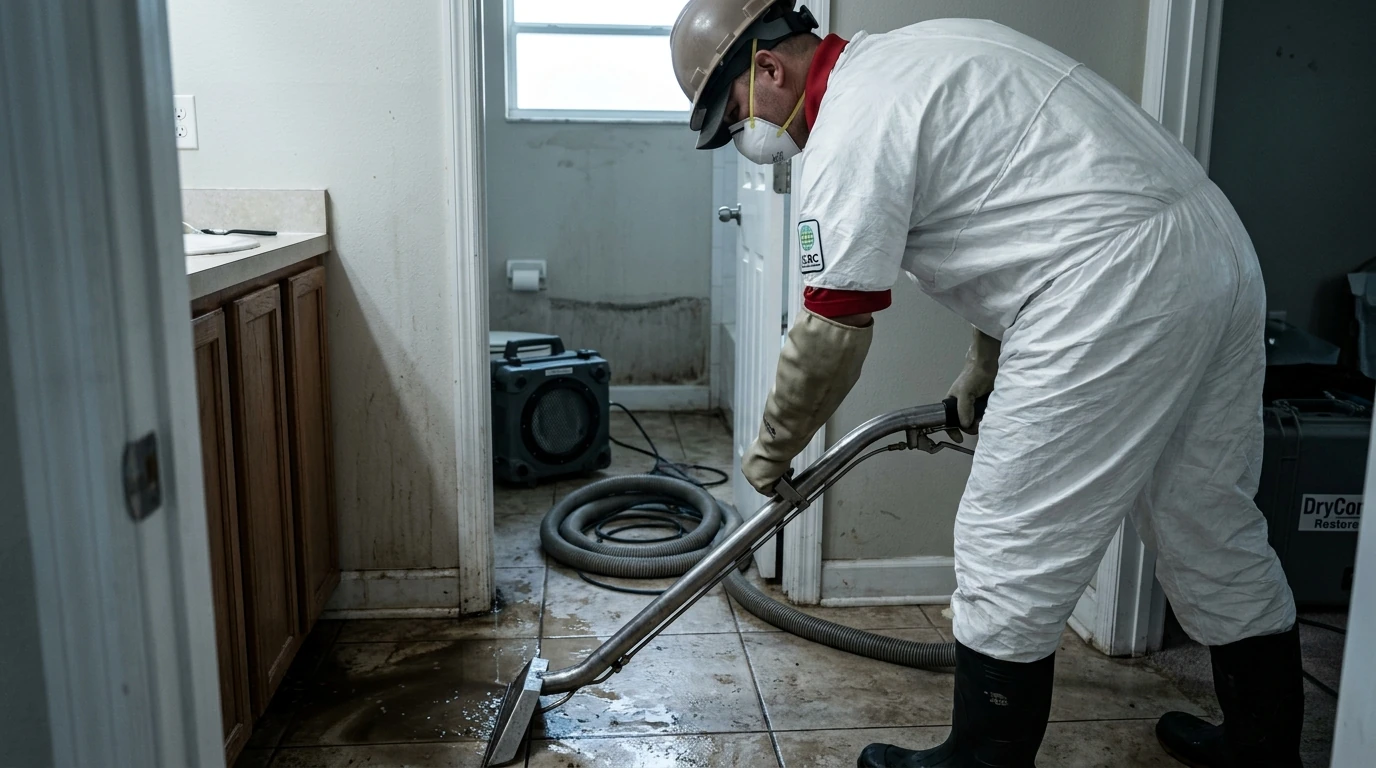
Professional sewage remediation follows five phases: containment, extraction, removal of contaminated porous materials, disinfection, and structural drying, all documented in writing as the job progresses. Skipping any one of these steps is how bacteria ends up trapped behind a wall six months later.
Containment comes first. Technicians section off the affected area with poly sheeting to keep contamination from spreading to clean parts of the home, especially important in Plant City’s older downtown-adjacent homes where HVAC returns sit low on interior walls. Extraction removes the standing water with equipment built for Category 3 water, not a household wet vac.
Anything porous that touched black water, carpet, carpet pad, baseboards, and often the bottom foot of drywall, typically has to be removed rather than cleaned. The EPA and the IICRC both classify these materials as unsalvageable once sewage penetrates them, because the bacteria embeds in the fiber structure faster than any surface disinfectant reaches it. After removal, every remaining hard surface gets treated with an EPA-registered antimicrobial, then the space is dried and monitored with moisture meters until readings return to the structure’s dry standard.
For a related walkthrough of what happens hour by hour after any water intrusion, see what to do in the first 24 hours after water damage.
Is Sewage Cleanup Covered by Homeowners Insurance?
Most standard homeowners policies cover a sudden sewage backup under the dwelling or personal property section, but many carriers require a separate sewer or water backup endorsement to trigger that coverage. Without the endorsement, some insurers deny the claim outright, even for a one-time event.
The distinction that matters is sudden versus gradual. A pipe that backs up once during a storm surge reads very differently to an adjuster than years of tree roots slowly infiltrating a sewer line. Documentation from a licensed remediation crew, moisture logs, photos, disposal records for removed materials, gives the adjuster something concrete to approve rather than a verbal description of what happened.
For a broader look at how water-related claims typically get evaluated in Florida, the site’s guide on homeowners insurance and water damage walks through common exclusions and what documentation actually moves a claim forward.
How Do You Know When Sewage Cleanup Is Actually Done?
Sewage cleanup is complete when moisture readings across the affected structure return to a dry standard and post-remediation verification confirms no residual contamination on treated surfaces. A room that looks and smells clean can still fail a moisture check behind the baseboard.
A reputable crew doesn’t call the job finished off appearance alone. They take daily moisture readings throughout the drying phase and compare final numbers against an unaffected reference area in the same home. For jobs where contamination reached wall cavities, some remediators also run a post-work ATP or surface swab check before clearing the space for reoccupancy.
If you’re dealing with a sewage backup in the Plant City area right now, DRYCOR RESTORE runs 24/7 emergency response and is an IICRC Certified Firm, which means the containment, extraction, and disinfection steps above follow a documented protocol rather than guesswork. Request a written scope before anything is torn out so you know exactly what’s being removed and why.
A sewage backup rarely stays contained to one room if it sits untreated for more than a few hours. The faster the contaminated materials come out and the drying starts, the smaller the footprint of the repair, and the more likely your insurance documentation holds up under review.
About DRYCOR RESTORE
DRYCOR RESTORE is an IICRC Certified Firm serving Thonotosassa, Plant City, and the greater Tampa Bay area since 2005 (license CBC1253966), operating as a Managed Repair Preferred Vendor for 34 insurance carriers in Florida. Their crews handle sewage cleanup, water damage restoration, mold remediation, and related storm and flood recovery work across Hillsborough, Pinellas, and Polk counties, with 24/7 emergency dispatch and IICRC WRT-certified technicians on staff.