
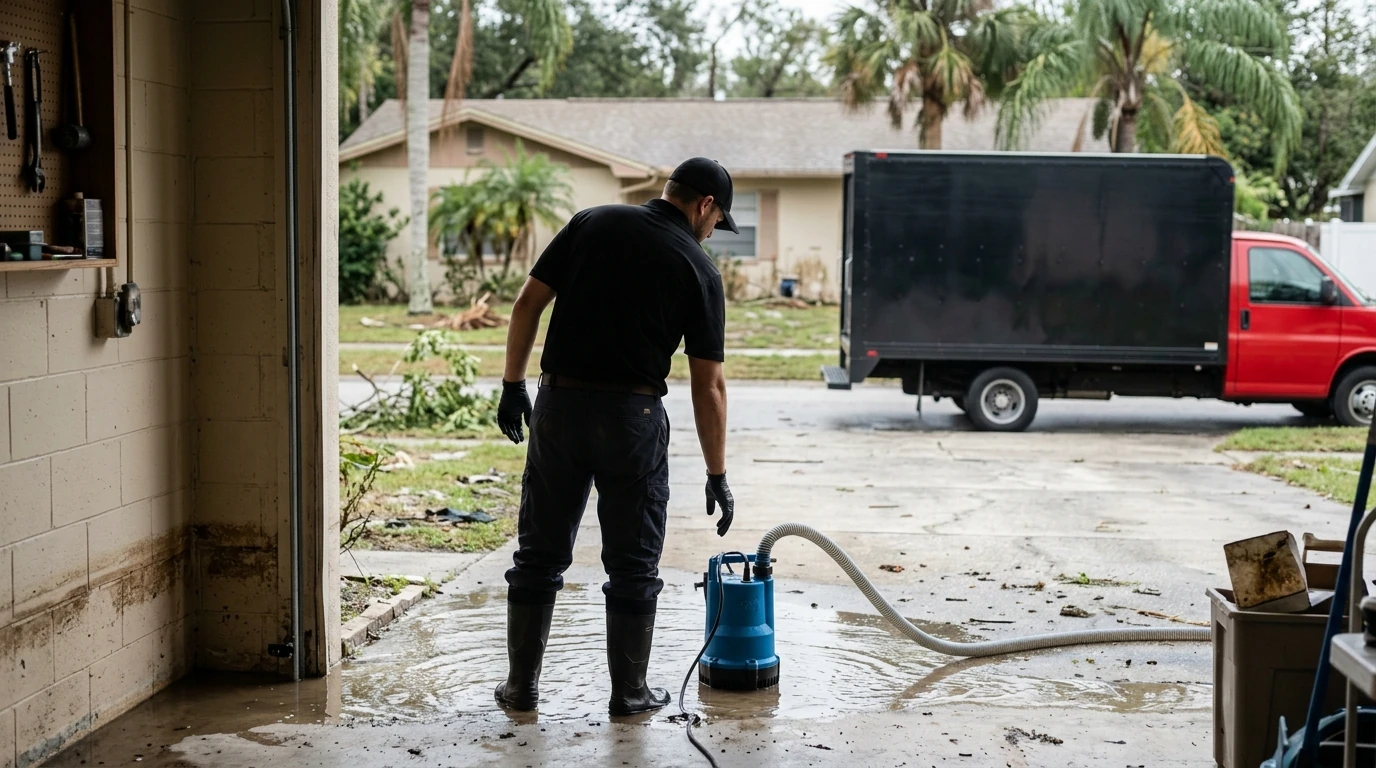
For flood damage cleanup in Thonotosassa, FL, call DryCor Restore at (813) 829-1091. The company is an IICRC Certified Firm that takes calls around the clock and works directly with Florida insurance carriers on the documentation a flood claim needs.
This is different from a burst pipe under the sink. When floodwater comes from outside, whether it’s the Hillsborough River backing up near Trout Creek Park or sheet flow off a saturated yard after a tropical system, it carries silt, bacteria, and whatever it picked up crossing lawns, ditches, and septic drain fields on the way to your door. That changes who you call, in what order, and how the cleanup is handled once someone arrives.
When Is It a Restoration Company vs. the Power Company vs. My Insurer?
Call your utility first if water is anywhere near an electrical panel, outlet, or appliance that’s still plugged in; a licensed electrician or the power company needs to confirm it’s safe before anyone wades in. After that, call a flood restoration company, not your insurance agent, to start mitigation the same day.
Florida homeowners policies require you to limit further damage once water is in the structure, and a restoration crew is who actually does that: extracting standing water, pulling wet baseboards, and setting containment before mold has a chance to start. Most homeowners policies exclude flood losses from rising water outright, which is why FEMA runs a separate National Flood Insurance Program through FloodSmart.gov; if you carry an NFIP or private flood policy, call that insurer to open a claim once the water is out and the damage is documented, not before. Calling the restoration company first protects both your home and your claim, because they’re the ones who’ll photograph and moisture-map the loss for whichever policy ends up paying.
What Happens When You Call a Thonotosassa Flood Cleanup Crew?
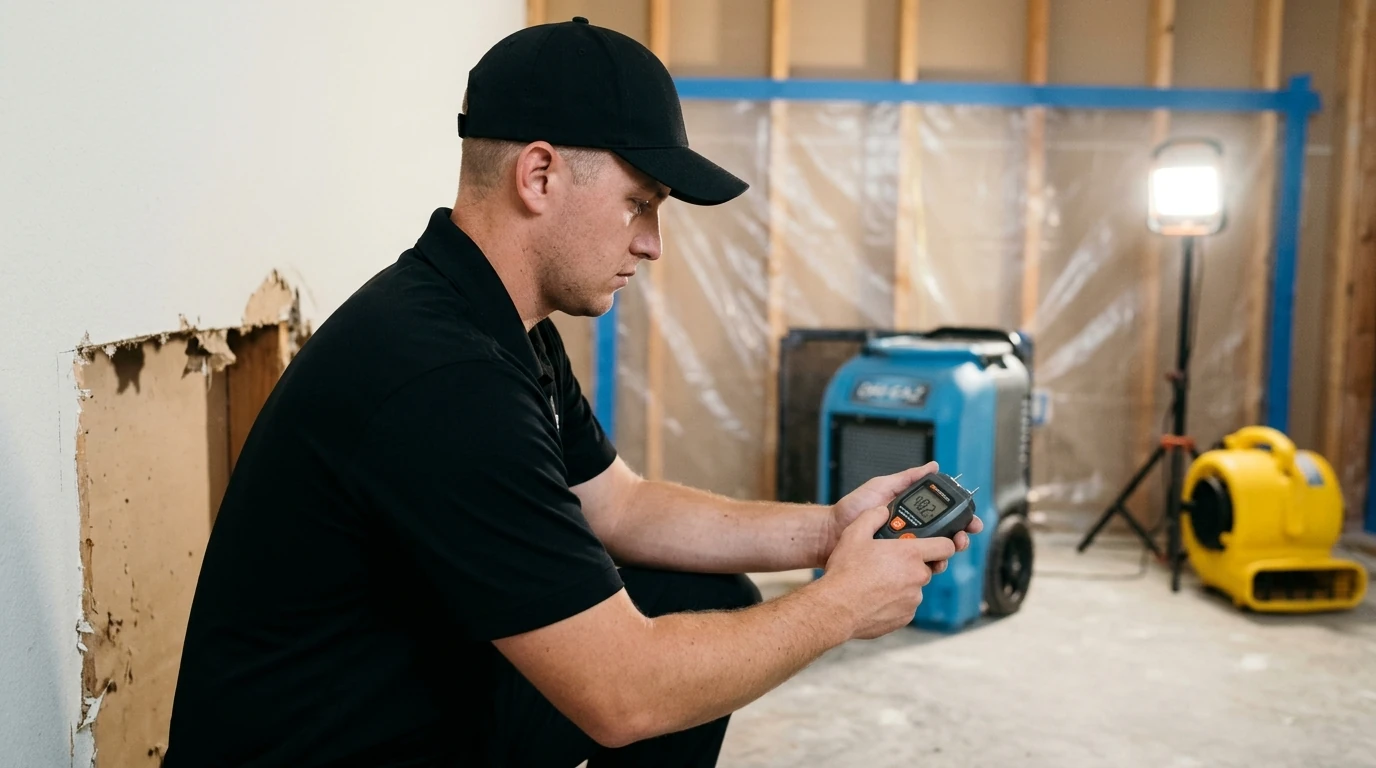
The first call is a short triage: what’s the water source, how deep, how long has it been standing, and is power still on in the affected area. From there a crew comes out to extract standing water, set up air movers and dehumidifiers, and map moisture behind walls and under flooring with a penetrating meter.
Because outside floodwater is treated as Category 3, also called black water, under the IICRC S500 standard, the approach looks more like a sewage loss than a typical leak. Wet drywall usually gets a flood cut a foot or two above the waterline instead of just dried in place, carpet pad and insulation that touched floodwater are usually removed rather than saved, and surfaces get treated with an antimicrobial before anything new goes back in. If your situation also involves a backed-up drain line on top of the outside water, the same contamination protocols apply, and it’s worth asking whether the crew handles sewage cleanup as part of the job, since the equipment and PPE overlap.
If the flooding came with wind damage, roof intrusion, or downed trees from the same storm, that’s a separate but related scope; a crew that also handles storm damage restoration can usually fold both into one job instead of sending two separate companies.
What Should I Ask Before Hiring a Flood Cleanup Company?
Ask whether the technician on-site holds an IICRC Water Damage Restoration Technician (WRT) certification, whether they’ll provide a written moisture map and photo log, and whether they document the loss in the format your insurer or the NFIP requires for reimbursement. A company that can answer all three without hesitating has done this before.
Also ask who handles the extraction itself versus who subcontracts it out. A company running its own emergency water removal equipment, rather than farming the job to a third party, generally means fewer delays and one point of contact for your claim paperwork. If DryCor Restore’s Managed Repair Preferred Vendor relationships with Florida carriers are relevant to your policy, that’s worth asking about directly, since a company already on an insurer’s approved list typically moves through claim review faster.
Is Outside Floodwater Different From a Pipe Burst or Appliance Leak?
Yes. A supply line break starts as Category 1 clean water, while floodwater from a river, creek, or storm surge is Category 3 from the first minute it touches your floor. That distinction drives nearly every decision a crew makes, from what gets torn out to what PPE they wear, and it’s why a flood loss and a pipe-burst loss are handled on two different checklists even though both start with wet floors.
If your water is coming from inside the house instead (a failed line, an overflowing fixture, a water heater), that’s a different call entirely; see our guide on what to do after a flood in Thonotosassa for the broader action plan once the water recedes.
Before anyone arrives: stay out of standing water if there’s any chance it’s touching an outlet or panel, move what you can to a dry upper level, and start photographing the waterline and affected rooms. Those photos matter more than almost anything else for the claim that follows. When the water is down and it’s safe, call DryCor Restore at (813) 829-1091 to get extraction and documentation started the same day.
About DryCor Restore
DryCor Restore is an IICRC Certified Firm based in Thonotosassa, FL, operating since 2005 under Florida contractor license CBC1253966. The company is a Managed Repair Preferred Vendor for 34 insurance carriers in Florida and runs crews across Tampa Bay handling flood damage restoration, emergency water removal, storm damage restoration, and sewage cleanup, among its other restoration service lines. It’s under Showalter Construction & Restoration, LLC and holds a 4.9 Google rating from local customers.