
24/7 Emergency Storm Damage Restoration in Pensacola
24/7 emergency storm damage restoration in Pensacola, FL. IICRC-certified, insurance billing accepted. Call (813) 829-1091.
Our IICRC-certified technicians are dispatched from our Tampa Bay headquarters and are typically on-site in Pensacola within 60 minutes of your call.
Storm damage in Pensacola doesn’t wait for business hours, and neither do we. Gulf storms track fast off the water, and a system that’s a tropical depression at sunrise can be dropping straight-line winds and sheet rain on Escambia County by evening. When shingles lift, a tree comes down on a carport, or storm surge pushes water up from Pensacola Bay into a slab home, DRYCOR RESTORE answers 24/7 and gets a crew moving toward the damage the same day.
Why Pensacola Properties See Storm Damage So Often
Pensacola sits on the Gulf Coast at the western edge of the Florida Panhandle, which puts it squarely in the path of tropical systems moving north out of the Gulf of Mexico from June through November. The combination of storm surge risk along the bay, heavy rain bands that stall over Escambia County, and wind gusts that outrun a storm’s own forward speed means roof damage, downed trees, and window failures often happen together rather than one at a time. Add in sandy coastal soil that drains fast in a light rain but saturates quickly under sustained hurricane rainfall, and you get a pattern we see constantly here: water intrusion through a compromised roofline that keeps draining into the structure for hours after the wind dies down, even though the yard looks dry by morning.
Older homes near the city’s core, many built well before current wind-load standards, are especially exposed. Original roof decking and older window glazing weren’t engineered for today’s wind speed requirements, so a storm that a newer build shrugs off can crack fascia, peel underlayment, or push water past flashing on an older Pensacola roof.
Our Storm Damage Restoration Process Here
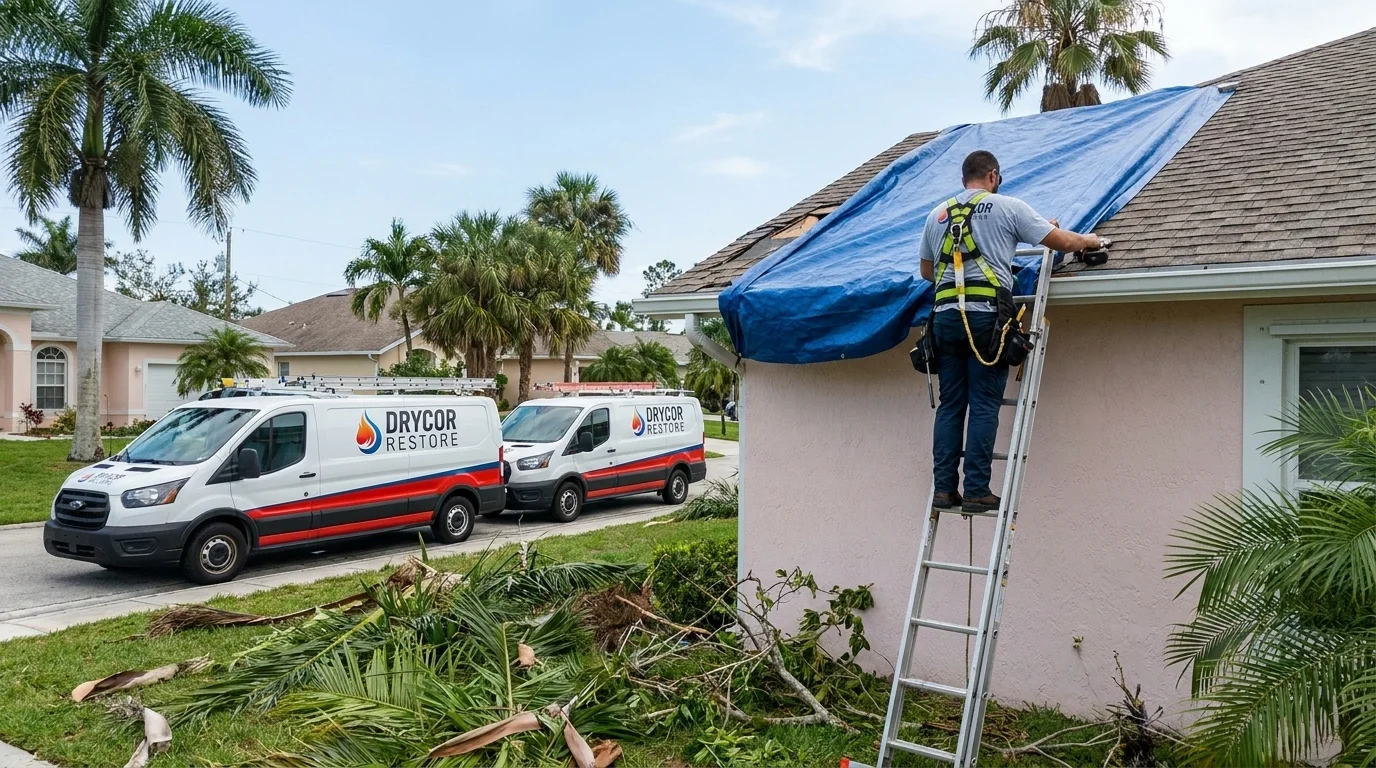
Storm work in Pensacola starts with securing the structure, not drying it, because an open roof or broken window in a Gulf climate means more rain is likely before the system clears. We tarp roofs, board broken openings, and extract standing water first, then move into structural drying once the property is weathertight. From there we document every affected material with photos and moisture readings for the insurance file, remove what can’t be dried in place (wet insulation, saturated drywall, ruined flooring), and set drying equipment calibrated to the humidity we’re actually dealing with on the coast, not a generic inland number. Gulf Coast air holds more moisture year-round, so drying timelines here often run longer than the same job would take in a drier climate, and we adjust equipment placement and dehumidification accordingly.
Tree damage cleanup gets handled alongside structural repairs rather than as a separate job, since a fallen limb that punctured a roof usually means both tree removal coordination and roof-level water mitigation need to happen on the same visit.
Reaching Pensacola from Thonotosassa
Our crews travel the I-75 to I-10 corridor west to reach Pensacola and the surrounding Escambia County area. Because storm events in the Panhandle often trigger regional dispatch, we treat Pensacola calls as a priority route during active weather, not an afterthought behind closer jobs. Being a 24/7 operation matters here specifically because storm damage doesn’t stay contained. A tarped roof holds through one more rain shower, not three days of afternoon thunderstorms stacking on top of hurricane runoff.
Pensacola Insurance & Documentation
Florida’s hurricane and wind-driven rain claims carry their own scrutiny, and carriers frequently want clear separation between wind damage and flood damage on the same loss, since those are often different policies entirely. We document storm damage with the level of detail that distinction requires: wind-caused roof and envelope failures photographed and measured separately from any surge or groundwater intrusion, so your claim isn’t delayed by ambiguity over which policy should cover which part of the loss.
Local note
Pensacola’s sandy soil drains well on an ordinary day, which can be misleading after a hurricane. Groundwater tables near the bay rise fast during sustained heavy rainfall, and we’ve found that crawlspaces and low-lying slab perimeters can stay saturated for days after the storm itself has passed and the yard looks dry again. We check subfloor and perimeter moisture on follow-up visits specifically because the surface drying out doesn’t mean the ground underneath has.
If a storm has left your Pensacola property with roof damage, downed trees, or water intrusion, call DRYCOR RESTORE at (813) 829-1091. We’re licensed (#CBC1253966), available around the clock, and ready to secure the structure before the next system rolls in off the Gulf.
Serving Pensacola from our Tampa Bay headquarters — ★ 4.9 on Google
“Very consistent professional friendly customer service during a trying time being out of my home for 7 months.” — Virgil, October 2026Read our reviews on Google →
Storm Damage Restoration in Pensacola: Service Coverage
Frequently Asked Questions
How fast can you arrive for storm damage restoration in Pensacola?
How fast can DRYCOR RESTORE get a crew to Pensacola after a storm?
Does storm surge from Pensacola Bay count differently than wind damage on my insurance claim?
Are older Pensacola homes more vulnerable to storm damage?
How long does drying take after storm water intrusion in a Gulf Coast climate like Pensacola's?
Do you handle both tree damage and the resulting roof leak, or just one or the other?
Storm Damage Restoration response in Pensacola
Most Pensacola calls see a technician on-site within 60 minutes from our Tampa Bay headquarters.