
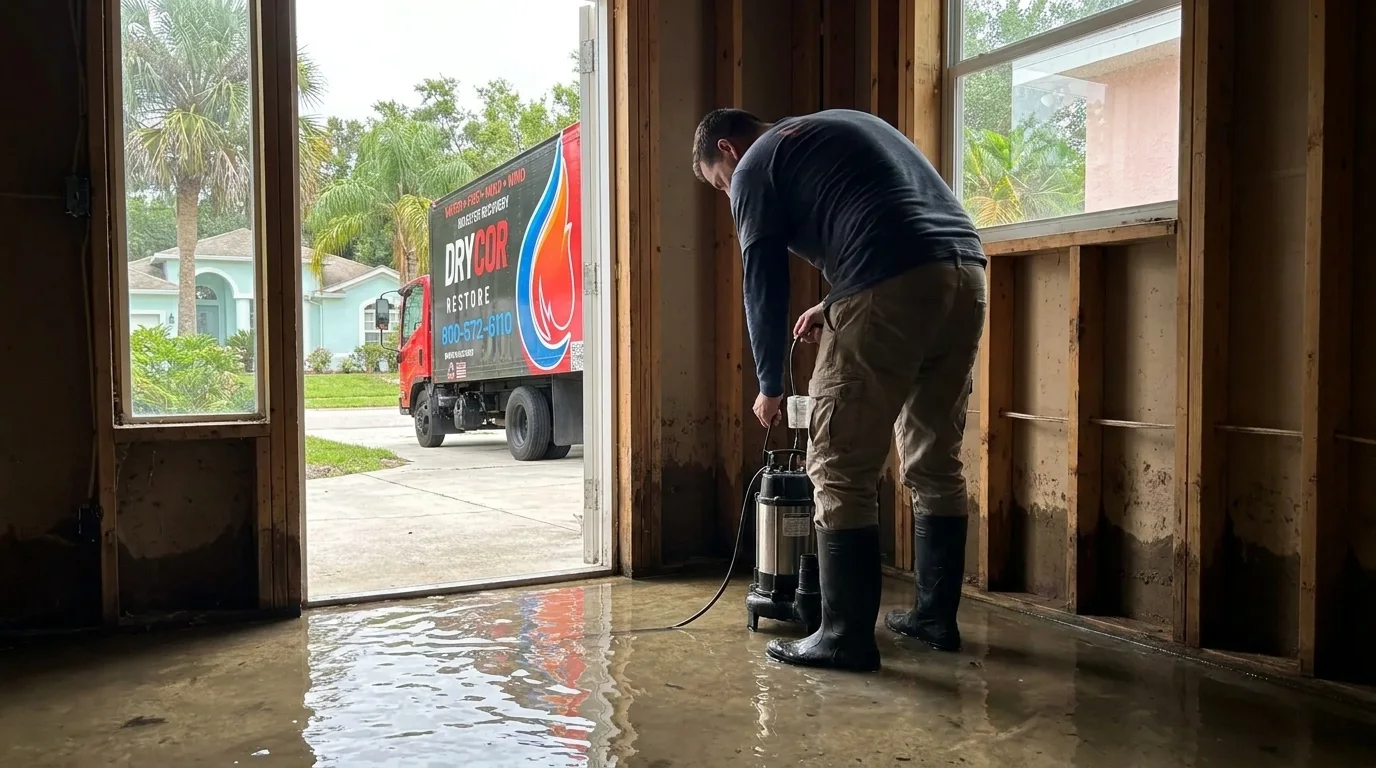
24/7 Emergency Basement Flooding Cleanup in Thonotosassa
24/7 emergency basement flooding cleanup in Thonotosassa and surrounding areas. IICRC-certified, insurance billing accepted. Call (813) 829-1091.
Basement flooding in Thonotosassa? Call DRYCOR RESTORE now, we answer 24/7. If you’re noticing a musty smell rising through floor vents, water pooling in a below-grade utility room, or a sump pump that quit during last night’s storm, the damage is already spreading into wall cavities and subfloor even if the surface looks dry. Standing water against a below-grade wall creates hydrostatic pressure that pushes moisture through concrete block and footers long after the visible puddle is gone, which is why basement and below-grade flooding needs its own extraction and drying approach, not a generic mop-and-fan response.
What Basement Flooding Cleanup actually involves
True basements are uncommon in Florida construction because of the high water table, but Thonotosassa still has a share of older homes, split-level additions, below-grade garages, and finished lower-level rooms that flood the same way a basement would: slowly, from the ground up, through block walls, slab cracks, or a failed sump system rather than a burst pipe from above. That changes the whole approach. We pump standing water with submersible pumps first, then switch to truck-mount extraction for carpet, pad, and any standing water trapped against baseboards. Moisture meters and thermal imaging map how far water has traveled into drywall, insulation, and framing behind finished walls, because below-grade spaces hide moisture that a surface check will miss. Depending on how saturated the materials are and how long water sat before the call came in, drying a finished basement space typically runs several days with commercial dehumidifiers and air movers running continuously, monitored and logged until materials read dry per the IICRC S500 standard.
Our process
- Source and water category assessment. We identify whether the water came from groundwater intrusion, a failed sump pump, a supply line, or a sewage backup, since each category requires different handling and PPE.
- Pump-out and extraction. Submersible pumps clear standing water first, followed by extraction wands and truck-mount equipment on carpet, pad, and hard flooring.
- Moisture mapping. Meters and thermal imaging locate trapped moisture inside block walls, baseboards, and framing that isn’t visible from the surface.
- Structural drying and dehumidification. Air movers and commercial dehumidifiers are sized for below-grade humidity loads, which run higher than an upper floor because the space is enclosed and often poorly ventilated.
- Monitoring and documentation. We log daily moisture readings until materials reach dry standard, which becomes part of the record if you’re filing a claim.
What separates a good basement flooding response from a bad one
The most common mistake is treating a flooded basement like a flooded bedroom: pull the water, run a few fans, call it done. That misses hydrostatic pressure, which keeps pushing groundwater through block walls for days after a storm, re-wetting materials that tested dry on day one. A thorough response checks wall cavities behind paneling or drywall, not just the visible surface, and sizes dehumidification for the enclosed, low-airflow conditions below grade rather than using the same equipment count as an upstairs room. Adjusters reviewing a basement claim look for documented moisture readings over time, clear water categorization (especially if a sewage backup is involved), and photos showing the extent of material removal, not just the initial extraction. Skipping any of those steps is how homeowners end up with a mold claim six weeks later that could have been prevented.
What does Basement Flooding Cleanup cost?
Costs vary with how much water intruded, how long it sat, whether the space is finished or unfinished, and whether the source was clean groundwater or contaminated backup. Every loss is different, which is why DRYCOR RESTORE provides a written scope before any work begins. Homeowners insurance typically covers sudden water events like a sump pump or appliance failure but often excludes gradual seepage or flood-zone groundwater intrusion, so it’s worth checking your policy’s water damage language before assuming coverage.
| Scenario | Typical range |
|---|---|
| Unfinished basement, clean water, minor pooling | $800 - $2,200 |
| Sump pump failure, carpet and pad extraction | $1,500 - $3,800 |
| Finished basement, drywall and insulation removal | $3,500 - $8,000 |
| Sewage backup or contaminated water | $4,000 - $10,000+ |
| Structural drying with monitoring, multiple days | $1,200 - $3,000 |
Seasonal & regional considerations
Thonotosassa’s rainy season runs roughly June through September, when afternoon thunderstorms and tropical systems push groundwater levels up and strain sump pumps and drainage that handle light rain fine the rest of the year. A high water table during these months means hydrostatic pressure against below-grade walls is at its worst, so a basement or below-grade space that’s never flooded before can suddenly start seeping after a heavy storm season.
Service area
DRYCOR RESTORE responds to basement and below-grade flooding throughout Thonotosassa and the surrounding area, including Tampa, Plant City, Lutz, and Zephyrhills.
If water is sitting in your basement or below-grade space right now, schedule your basement moisture assessment and we’ll get extraction and drying equipment on site to stop the damage from spreading further into walls and framing.
Frequently Asked Questions
Does homeowners insurance cover basement flooding cleanup?
How is drying a flooded basement different from drying an upstairs room?
My sump pump failed during a storm, do I need different cleanup than a sewage backup?
Can drywall and carpet in a finished basement be saved after flooding?
How quickly does mold start growing after a basement floods?
Looking for the best basement flooding cleanup company in Thonotosassa?
DRYCOR RESTORE provides licensed and insured basement flooding cleanup in Thonotosassa, FL and the surrounding area, and has served local property owners since 2005. Customers rate us 5.0 out of 5 stars on Google. We answer calls 24/7 — call (813) 829-1091 for immediate help.
Need Basement Flooding Cleanup now?
We respond 24/7 across Thonotosassa and surrounding FL cities.