
Water Leak Detection in Thonotosassa
24/7 water leak detection in Thonotosassa and surrounding areas. IICRC-certified, insurance billing accepted. Call (813) 829-1091.
A water bill that jumps for no reason, a warm spot on the slab, a musty smell behind a baseboard that won’t go away no matter how many times you clean it: these are the quiet signals of a leak that hasn’t announced itself yet. By the time water stains show up on drywall or a floor starts to cup, the leak has usually been running for weeks. Water leak detection finds the source before it turns into a structural or mold problem, without tearing out walls or flooring to guess.
What water leak detection actually involves
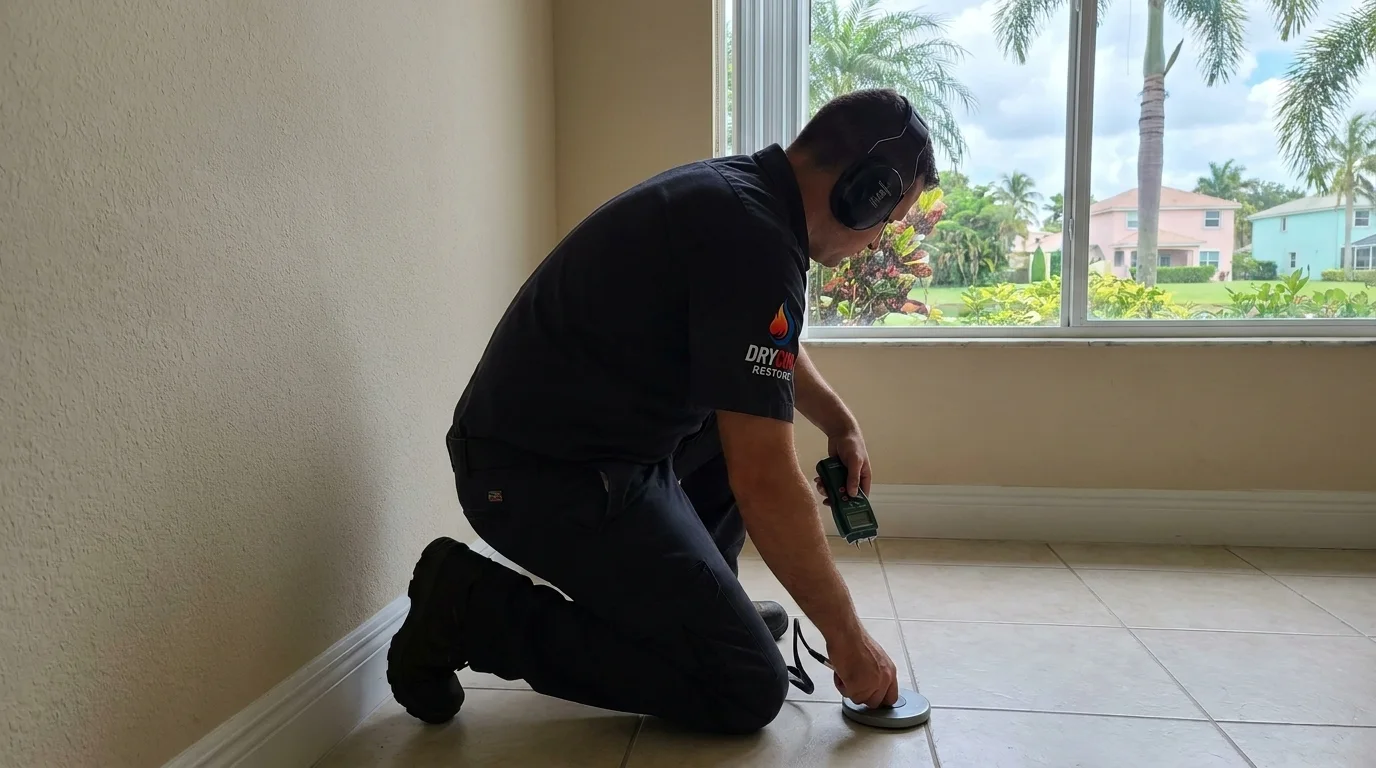
This is diagnostic work, not demolition. A technician uses a combination of thermal imaging, acoustic listening equipment, and moisture meters to trace where water is traveling versus where it’s actually originating. Thermal cameras pick up temperature differences in slabs and walls where water is wicking through material. Acoustic sensors pick up the sound of pressurized water moving through a pipe, which is how a slab leak gets pinpointed without jackhammering the whole floor. For plumbing under pressure, a pressure test can confirm whether the leak is in the supply line or the drain side, which changes the repair entirely. Most inspections take one to two hours depending on the size of the structure and how many fixtures need to be isolated and tested.
Our process
- Symptom interview and visual inspection. We walk the affected area with you, note where the smell, stain, or sound is strongest, and check the water meter for movement when all fixtures are off, which confirms whether there’s an active leak somewhere in the system.
- Thermal imaging scan. We scan walls, ceilings, and slab areas near plumbing runs to identify temperature anomalies consistent with moisture migration.
- Acoustic and pressure testing. For suspected slab leaks or leaks in a wall or wall in a wall cavity, we use listening equipment to trace the sound of water under pressure to a specific location, and isolate supply versus drain lines with a pressure test.
- Moisture mapping. Once the source area is narrowed down, we map moisture levels in surrounding materials (drywall, subfloor, insulation) to show how far the water has already traveled, which matters for both the repair plan and any insurance documentation.
- Written findings and next steps. You get a clear report on where the leak is, how long it’s likely been active based on moisture readings, and whether drying or remediation work is needed before the plumbing repair happens.
What separates a good leak detection response from a bad one
The most common mistake is skipping thermal imaging and acoustic equipment and going straight to opening drywall based on a guess. That often means multiple holes cut in the wrong places before the actual source is found, which costs more in repair than the detection would have. A second mistake is treating the visible stain as the source, when water travels along framing and plumbing runs before it shows up on a surface, sometimes several feet from where the pipe is actually leaking. Adjusters reviewing a claim want to see moisture readings and thermal images that document the extent of the problem, not just a photo of a stain, because that’s what supports the scope of repair. A detection report that includes readings, images, and a clear location is also what a plumber needs to do the actual repair without re-diagnosing the problem themselves.
What does water leak detection cost?
Costs vary based on how accessible the suspected leak area is and whether it’s a straightforward wall leak versus a slab leak requiring acoustic equipment. Every property and plumbing layout is different, so DRYCOR RESTORE provides a written scope before any work begins. Homeowners insurance typically covers the resulting water damage if the leak is sudden and accidental, but the detection itself is sometimes a separate line item depending on the policy, which is worth confirming with your carrier.
| Scenario | Typical range |
|---|---|
| Basic leak detection, single fixture or wall | $200 - $450 |
| Slab leak detection (acoustic + thermal) | $350 - $750 |
| Whole-house plumbing leak survey | $500 - $1,200 |
| Detection plus moisture mapping for insurance documentation | $400 - $900 |
Seasonal & regional considerations
Thonotosassa’s clay-heavy and shifting soils put ongoing stress on slab plumbing, and ground movement from Florida’s wet and dry season cycle is a common contributor to slab leaks in homes built before PEX became standard. Older copper supply lines, common in homes from the 1970s and 80s in this area, are also more prone to pinhole leaks as they age, which often show up first as a slow, hard-to-source drip rather than a sudden burst.
Service area
We provide water leak detection throughout Thonotosassa and the surrounding Hillsborough County area, including Temple Terrace, Plant City, and Seffner. Housing stock varies block to block in this region, from older slab homes to newer construction, and we adjust the detection approach based on plumbing age and foundation type.
If something in your home feels off, a bill that doesn’t match usage, a smell that won’t clear, or a spot on the slab that’s always warm, schedule a leak detection inspection before it becomes a bigger repair. Call DRYCOR RESTORE at (813) 829-1091 to get a technician and the right equipment on-site.
Services We Handle
- Roof Leak Detection
- Water Leaking
- Window & Door Leaks
Frequently Asked Questions
Does homeowners insurance cover water leak detection?
How do you find a leak inside a wall without cutting it open?
What's the difference between a slab leak and a regular pipe leak?
How long does a leak detection inspection take?
What happens after the leak is located?
Can a slow hidden leak actually cause mold?
Looking for the best water leak detection company in Thonotosassa?
DRYCOR RESTORE provides licensed and insured water leak detection in Thonotosassa, FL and the surrounding area, and has served local property owners since 2005. Customers rate us 5.0 out of 5 stars on Google. We answer calls 24/7 — call (813) 829-1091 for immediate help.
Need Water Leak Detection now?
We respond 24/7 across Thonotosassa and surrounding FL cities.